
We cut plastic injection moulds in our own tool room — single-cavity frame tools and multi-layer stack moulds — and then run them on our own injection machines. Most of what we cut is for phone cases, which happens to be the hard version of the job: thin walls, tight cosmetic tolerances, and a surface that has to stay clean for 100,000 shots. If you are looking for a plastic mould manufacturer who also does the injection moulding, that combination is the point.
A phone case mould is not a catalogue item. The same shape in straight TPU and in glass-filled PC is not the same tool, and a two-plate tool that drops a flat back is not the same tool as a four-slide structure that forms button openings and undercuts. That is why we do not publish a price list: you would be reading somebody else’s part.
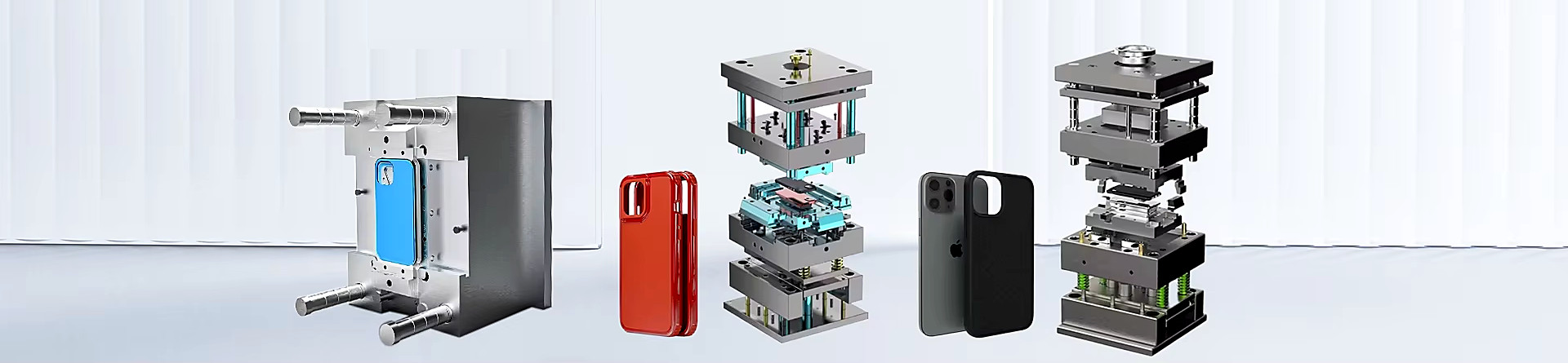
What we can tell you before you send anything is the range this work actually falls in, and the four variables that move you up and down inside it.
US$450–4,500     5–7 days       10–15 days      100,000 shots   5–15 days
per mould          3D drawing     mould build     per mould       first batch
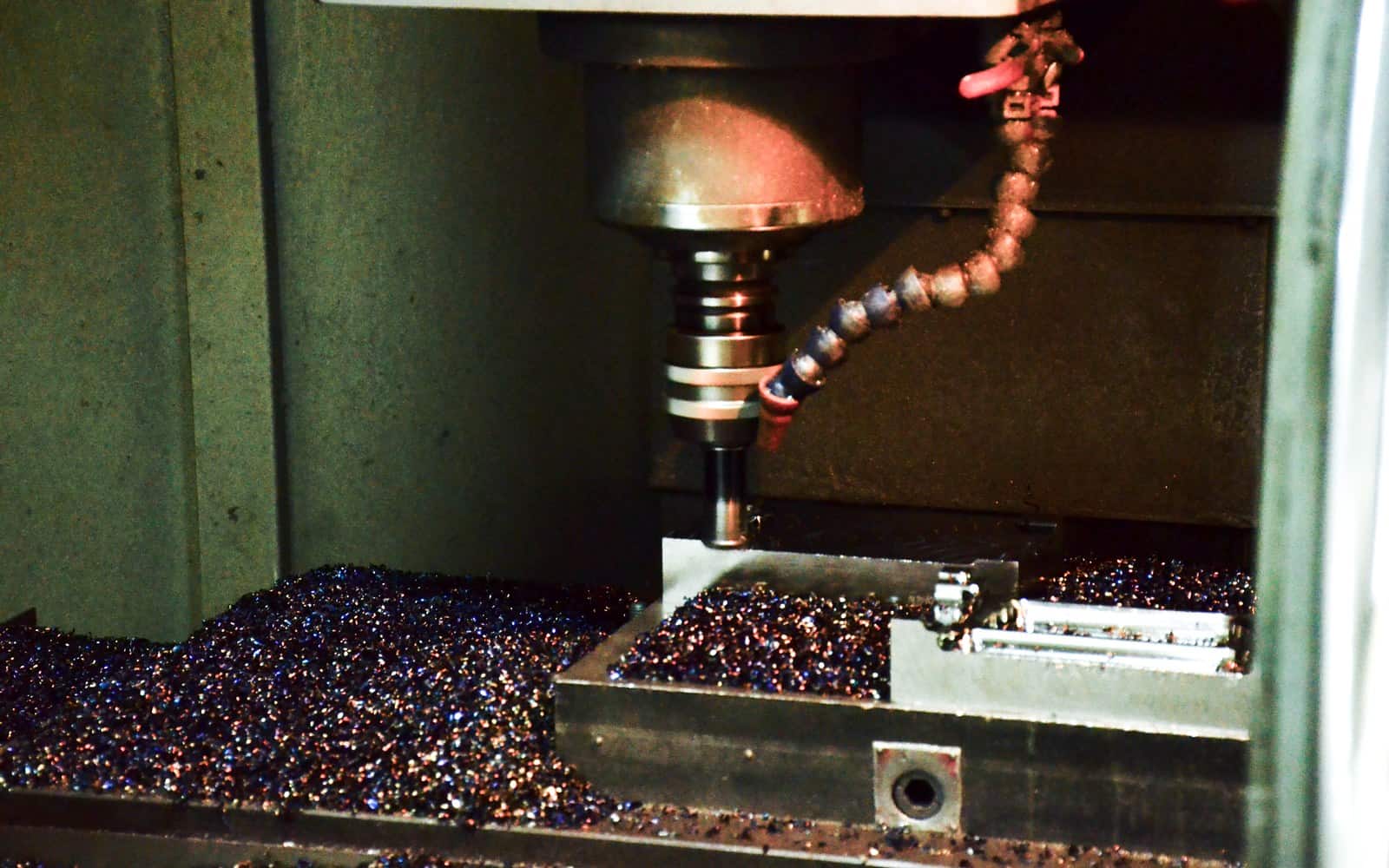
What decides the price of a phone case mould
Four things. Every quote we send can be traced back to one of them, and if you change one, the number changes.
| Variable | What actually changes in the steel | Where it lands |
|---|---|---|
| Part material | Glass-filled PC, flame-retardant ABS and soft-touch TPU wear a cavity differently. Filled resins need harder steel and more polishing time, because every scratch in the cavity becomes a scratch on every part. | Straight TPU or PC sits at the bottom of the range. Filled and engineering resins move you up. |
| Part complexity | A flat back with one camera opening is a few hours of CNC and one polish. Undercuts, button openings, deep ribs, a grained texture and a lens lip each add slides, electrodes and EDM hours. | Cost tracks machining hours almost linearly. This is usually the biggest single lever. |
| Cavity count | Each cavity needs its own core and cavity insert, its own cooling run and its own place in the runner layout. Four cavities is four sets of precision work, all of which must hold tolerance at the same time. | 1×1 sits at the bottom. 1×2 and 1×4 raise the tool cost faster than they raise output, so they only pay back at real volume. |
| Structure | Two-plate (upper and lower) is the default. A four-slide structure adds slide blocks, angle pins and lifters so that undercuts and side openings can release — a different order of machining and a different order of assembly. | Two-plate sits in the lower half of the range. Four-slide work sits at the top of it. |
Where your part lands in that range
US$450–4,500 is the honest span across those four variables, converted at RMB 6.67 to the dollar. A simple single-cavity TPU case with a flat back lands near the bottom. A four-slide tool for a hard-shell model with button openings, a grained finish and multi-cavity output lands near the top.
What we need from you before we can quote
We can usually come back with a costed tooling quote inside two working days of having these four things. Without them, any number would be a guess, and guesses turn into arguments at T1.
- The part. A 3D file of the case, or the exact phone model plus the wall thickness you want. If you only have a physical sample you like, send photographs with a ruler in frame and we will tell you what we think it was moulded in.
- The material and the finish. TPU, PC, PC+TPU two-shot, or a filled grade. Matte, gloss, soft-touch or a moulded-in texture — a texture is cut into the steel, so it is a tooling decision, not a coating decision.
- The volume. Pieces per order and pieces per year. This is what decides cavity count, and cavity count is what decides whether the tool pays for itself.
- Whether the part will be decorated. If the case will carry an IMD film, the cavity has to be built to hold film registration, and that changes the tool. Tell us at drawing stage, not after T1.
What the mould is made of
- Core and cavity: S136 stainless steel. It takes a mirror polish and resists the corrosive gases released during moulding, which is what keeps the surface of a decorated part clean run after run.
- Mould base: 45 steel.
- Service life: around 100,000 shots per mould under normal production. At one case per shot, that is 100,000 cases per cavity.
- Cavity layout: 1×1 for decorated parts, where a formed film has to land in register on every shot. 1×2 and 1×4 for undecorated shells, where per-piece cost matters more than decoration precision.
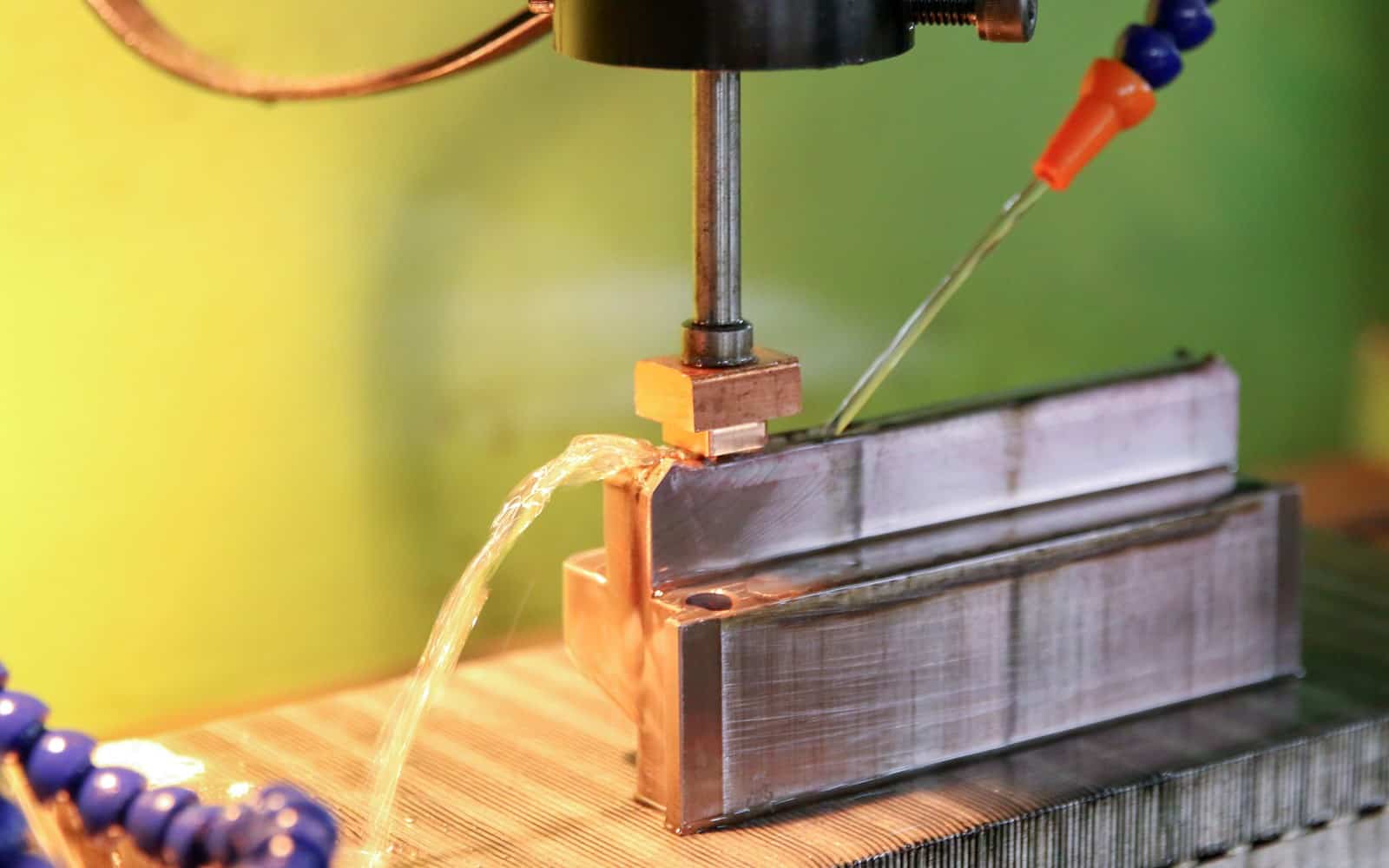
From drawing to first shots
| Stage | Days | What you get |
|---|---|---|
| 3D drawing and DFM review | 5–7 | A printable 3D model of the part and the tool, with the draft angles, gate position and any change we recommend before steel is cut |
| Mould build, after you sign off the drawing | 10–15 | Core and cavity cut, fitted, spotted and assembled; T1 trial run inside this window |
| T1 report | — | Photographs, video and a first-article check on the parts from the trial, sent to you before anything else happens |
| Pre-production sample approval | your side | Physical samples couriered so you approve what you will actually receive |
| First production run | 5–15 | Bulk parts after you approve the sample |
Three weeks from drawing to first shots
Add it up and it is about three weeks from drawing to first shots, and four to five weeks to a shipped first order — assuming the drawing comes back approved without a design change. If T1 shows a defect, the clock restarts on the modification, not on the whole tool.
Buy the mould from the moulder, or from a tool shop?
Both are normal. The difference shows up at T1 and again in the first week of production.
| Question | Independent tool shop | Mould and moulding under one roof |
|---|---|---|
| Who runs the trial? | The moulder, who has never seen the tool before | The people who cut it |
| Who adjusts the machine when parts warp? | Whoever you can reach — and each side blames the other | One team, same building, same day |
| Who owns first-run yield? | Split, usually argued about | Us. The tool is not finished until the parts are good |
| How many handovers? | Tool shop → moulder → you | None |
A mould cut here runs on our own floor: 45 injection machines and 40 million cases a year of capacity. That is the practical reason a tooling change does not sit in a queue at a third party while your launch date moves.
Moulds cut before the phone exists
A phone case mould has to be ready before the phone it fits goes on sale. That sounds obvious until you look at when most tools are actually cut: after a retail device arrives, gets measured, and gets quoted. By then the model has been selling for two or three months and the shelf space is gone.
We work the other way round. Tooling is cut four to six months ahead of a launch, from model data collected before the device ships — which is why a new model can be quoted in days rather than weeks.
How we cut a mould for a phone that has not launched
Dimensional data on a new model reaches us through the supply chain months before retail. The tool is cut from that data, not from a retail unit: five to seven days for the 3D drawing and DFM review, ten to fifteen for the steel. The first trial run lands while the model is still being announced, not after its launch quarter has sold through.
5,000 models, two or three misses in over a decade
More than 5,000 phone models have passed through this tool room. In over a decade of cutting from pre-launch data, we have missed on two or three of them. We give that as a count rather than a percentage, because a count can be checked.
When two generations share one shell
Sometimes no new tool is needed at all. When a manufacturer keeps the external dimensions, the new model drops straight into the existing cavity — the iPhone 18 Pro uses the same shell as the 17 Pro, and the 18 Pro Max the same as the 17 Pro Max. Nothing is re-cut, nothing is re-quoted, and there is no fit risk to disclose, because the fit is a property of the part rather than a claim about it.
What the fit risk actually is
Be clear about the trade-off. A pre-launch tool is cut from market data, not from a retail device, so a perfect fit on a phone nobody has held yet is not something we will promise. We state that before you commit rather than after. If a dimension turns out to be wrong on a detail, we quote the modification and its lead time up front, so the delay is measured in days instead of in a missed launch.
We also run on your tool
Yes — if you already own a mould, we will mould on it. Send the 2D or 3D drawing if you have it, the steel type, the cavity count and the last maintenance record. We mount it, run a trial and send you a report with part dimensions before we commit to a production quantity. If the tool needs repair first, we quote that separately and show you why, rather than running a worn tool and delivering parts you have to reject.
Two ways to handle tooling ownership
- You pay for the tool and own it. The mould is quoted at cost against your part. Once the tooling invoice is paid in full, the mould is yours: it stays here for your production, and you can ask us to ship it to you at any point after that. Until the tooling is settled, the mould stays with us.
- We own the tool and spread its cost. If your phone model is one we already run, printing your artwork needs no tooling charge and no plate charge at all. If the model is new to us, we cut the tool ourselves and recover its cost inside the unit price instead of sending a separate tooling invoice.
Which one is cheaper depends on how long you plan to sell the model. Ask us for both numbers; we will show you the crossover point.
FAQ
What is the cheapest mould you can make?
US$450 is the floor — a single-cavity tool for a simple TPU or PC part with a flat back. Anything with slides, a texture or multiple cavities sits above that.
How long does a mould last?
Around 100,000 shots per mould with an S136 core and a 45 steel base. At one case per shot that is 100,000 cases. If your annual volume is higher than that, we will quote heavier steel and a scheduled maintenance interval instead.
Can you make a mould for a phone model you have never run?
Yes. We cut our own tooling, which is why a new model can be quoted in days rather than weeks, and why the T1 sample does not have to travel between three suppliers.
Do you do four-slide structures?
Yes. Four-slide work is what allows undercuts, side openings and button cut-outs to release cleanly. It is also the top of our price range, because slides, angle pins and lifters are a different order of machining.
Who owns the mould?
Whoever paid for it. Once the tooling invoice is paid in full, the mould is yours and you may ask us to ship it to you at any time. Before that it stays with us. If we absorbed the tooling into the unit price, we own it — tell us before the quote if that matters to you, because the two routes are priced differently.
What happens if T1 shows a defect?
We modify the tool. Changes that come from our own drawing or machining are on us. Changes that come from your side after the drawing was approved — a new wall thickness, a new material, a new opening — are quoted as a modification, and we will tell you which category it is before we start cutting.
Send your drawing or your phone model — we reply with a costed tooling quote in two working days.
Include the material, the finish, the cavity count you have in mind and your annual volume. If you do not know the cavity count, tell us the volume and we will recommend one.
On confidentiality: what you send us stays with us. We never disclose your drawings, artwork or product information to any third party without your written consent — and we sign an NDA before you share a single file.
Send us what you are making.
Model, quantity and the artwork you already have is enough to start. You get a price range and a lead time within one working day — no account, no ticket queue, no waiting for a form to be read.