Heat transfer and sublimation are the same process under two names: dye is printed onto a film, the film is pressed against a coated shell, and the dye turns to gas and moves into the coating. There is no glue layer and nothing sitting on the surface afterwards, which is why a sublimated print wears like the shell itself rather than like a sticker.
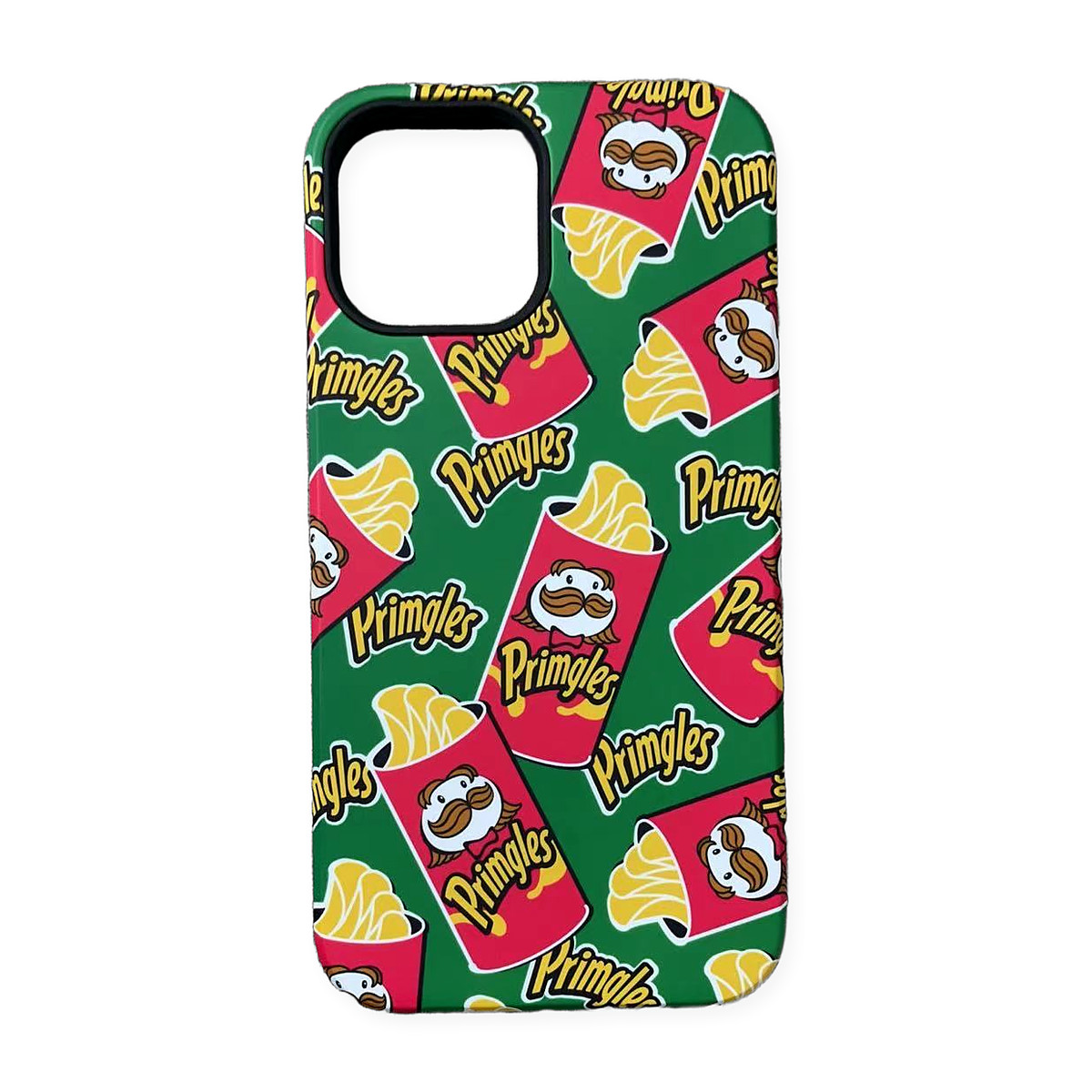
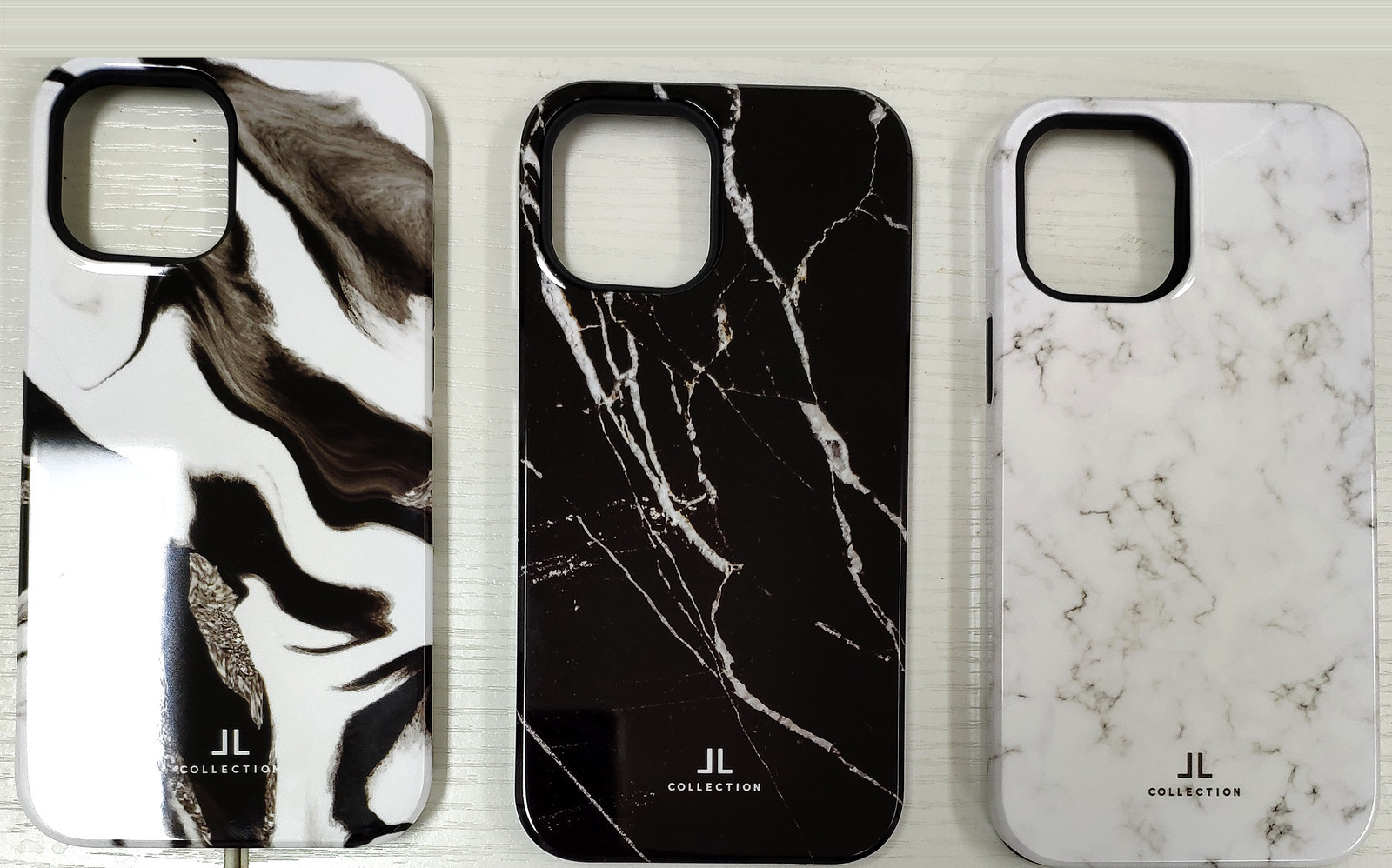
What changes between jobs is not the ink. It is whether the film wraps the sides. That one difference decides the artwork, the tooling, the yield and the price.
2D flat press           back panel only        no model tooling     flat artwork, no distortion
3D vacuum press         back plus all sides    model insert needed  3D stretched artwork required
2D sublimation — the flat press
A flat heat press pushes the film onto the back of the shell. No vacuum, no wrap, no model-specific mould.
- Coverage: the back panel only. The four sides stay the bare colour of the shell.
- Artwork: a flat file at final size. No stretching, so nothing is distorted and circles stay circles.
- Why it is reliable: the press only has to be flat and hot. Registration is simple, yield is high, and switching designs takes minutes.
- Why it is cheap: no vacuum machine, no insert tooling per phone model, and a lower scrap rate.
- The MagSafe advantage: on a flat press the magnet array cannot shift out of register with the print. On cases built for MagSafe this matters more than it sounds — a ring that sits 1 mm off looks like a defect.
- The cost of that: the back and the sides read as two different objects. On a dark shell a light back panel with dark edges looks unfinished.
3D sublimation — the vacuum press
The film is pulled down over the whole shell by vacuum, then heated. The dye sublimates into the coating across the back, the sides and up to the button openings.
- Coverage: back plus all four sides, continuous around the corners, and it can run up to the buttons and the camera lip.
- Artwork: a 3D stretched layout. Corners and radii need stretch allowance built in, and anything with a face, small type or a tight pattern placed on a corner will pull long and blur. This is the part customers underestimate: the file costs more design time than the print costs to run.
- Tooling: a vacuum machine plus a dedicated insert for each phone model. That insert is why the MOQ is per model and not per design.
- Where it earns its price: full-bleed gradients, fluid marble, landscapes, streetwear all-over prints, anything where an edge that stops mid-design would ruin the object.
- The honest trade: yield is lower. Corners and R corners are where sublimation distorts, and a run with a demanding design will have a higher reject rate than a flat press. We quote accordingly rather than promising a number we cannot hold.
Why only coated PC, or PC over TPU
Sublimation dye needs a polyester or polyurethane coating to bond into. A plain TPU shell has no such coating, so the dye has nothing to enter and the print washes off in the first week. That leaves two constructions:
- Single rigid PC with a sublimation coating. Thin, hard, high gloss, and the print sits in the coating.
- 2-in-1: TPU inner frame plus PC outer shell. The TPU gives drop protection and grip, the PC carries the print. This is the construction most premium full-wrap cases use.
2D against 3D
| Question | 2D flat sublimation | 3D vacuum sublimation |
|---|---|---|
| Printed area | Back panel only; the sides stay bare | Back plus all four sides, up to the buttons |
| Equipment | Flat heat press | Vacuum press plus a model-specific insert |
| Artwork | Flat file, no stretching | 3D stretched layout with corner allowance |
| Distortion | Almost none | Corners and R corners pull long |
| Unit price | Low | High |
| Yield | High | Medium to low on complex designs |
| Feel | Flat and smooth; dye is inside the coating | Flat and smooth, no glue layer, one continuous image |
| Material limit | Coated PC or 2-in-1 only | Coated PC or 2-in-1 only |
Magnetic or not, on every shell
MagSafe is now the default expectation rather than an upgrade, so both constructions can be built with or without a magnet array: rigid PC with magnets, 2-in-1 TPU+PC with magnets, and the same shells without. On 2D work the magnet ring is aligned to the flat print, which is the cleaner combination. On 3D full wrap we print around the ring.
Which one to choose
- Simple logo, solid background, low price, high volume: 2D.
- MagSafe, where the ring must sit dead centre: 2D, for the registration reason above.
- Full-bleed gradient, marble, landscape, all-over pattern: 3D, and budget for the stretched artwork.
- Full colour but not full coverage: neither. UV printing does the back in full colour with no tooling and no stretched file.
What we need to quote it
- The phone model, and the construction: rigid PC or 2-in-1 TPU+PC.
- Magnetic or non-magnetic.
- Artwork. For 2D, a flat file at final size. For 3D, we need to know whether you have a stretched layout or want us to produce it.
- Quantity per design and per model — the model insert is the reason those two numbers are quoted separately.
If a supplier quotes you a full-wrap price without asking for a stretched artwork file, ask them how they intend to avoid distorting the corners.
Sublimation is one of the twelve decoration methods we run under one roof. Start with the comparison of all twelve, or compare it with IMD, water transfer printing, screen printing and UV printing.
Send the model list, the artwork and whether you want magnets. We will tell you which of the two routes your design actually needs before you pay for artwork. Start here — NDA available before you share any file.
Send us what you are making.
Model, quantity and the artwork you already have is enough to start. You get a price range and a lead time within one working day — no account, no ticket queue, no waiting for a form to be read.