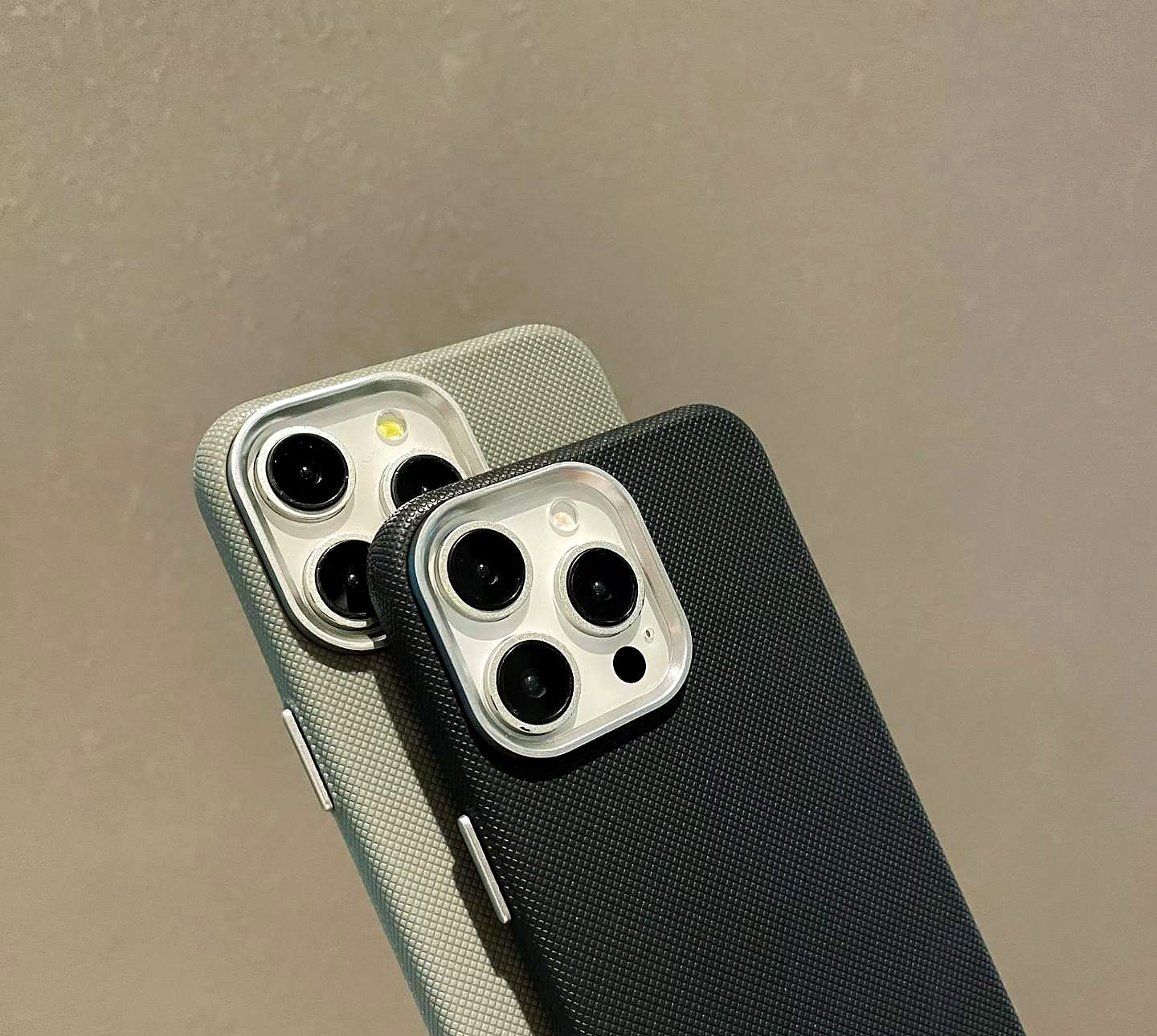
Every other decoration method on this site adds something to the shell. This one takes the shape of the steel. The pattern is cut into the mould cavity, so it is stamped into the plastic while the part is still forming — which is why it cannot peel, fade, or wear through, no matter how long the case is used.
1 set of moulds        3,000 pcs per model      no plate, no ink      CNC relief or mould grain
tooling minimum        production minimum       the texture is steel  two different routes
Two routes, same principle
Mould grain (texture across the whole surface)
The cavity is etched or EDM-textured so the entire shell comes out with a grain — fine leather, sand, matte, or a soft-touch pattern. There is no per-piece cost: once the steel carries the grain, every part inherits it. This is how a plain PC shell gets a leather feel without a leather sheet.
CNC relief (designed depth)
A logo, a geometric panel or a pattern is cut into the cavity as a shaped relief. Deeper than any print, deep enough to catch a fingernail, and it survives because it is the part’s own geometry rather than a layer on top. This is the route for a brand mark that has to be felt, not just seen.
What it costs, and why the minimums are what they are
There is no separate plate charge here. The tooling is the cost. The pattern lives in the mould, so the mould has to be made first, and a mould is quoted against the part — material, complexity and structure, exactly as on our mould page. That is why the minimum is one set rather than a quantity of pieces.
| Parameter | In-mould embossing |
|---|---|
| Tooling minimum | 1 set of moulds |
| Tooling cost | Quoted as a mould, against the part — no separate plate charge |
| Production MOQ | 3,000 pcs per model once the tool exists |
| First order | Negotiable below 3,000 while the tool is being amortised |
| Sample lead time | Follows the tooling schedule: 5–7 days drawing, 10–15 days to T1 |
The 3,000 figure exists because the tool cost has to be recovered across the parts. A design that never sees 3,000 pieces is usually better served by UV printing with a relief pass, or by laser engraving for a tactile mark without tooling.
Where it wins
- It cannot wear off. Not after a year, not after five. There is nothing on the surface to remove.
- No per-piece decoration cost. Once the tool exists, the texture costs nothing extra per part — unlike printing, which charges per piece and per colour, forever.
- A premium feel that photographs badly and sells well. Grain and relief are hard to show in a listing image and obvious in the hand, which is exactly what a brand paying for tooling wants.
- Consistent across millions of parts. The first piece and the hundred-thousandth carry the same pattern, because both came out of the same cavity.
Where it loses, honestly
- You pay before you see a part. Tooling is committed upfront. There is no way to trial this without cutting steel.
- Changing the pattern means changing the steel. A new grain or a moved logo is EDM rework or a new insert — not a new file. Make that decision before the tool is cut, not after.
- Deep relief costs cycle time. Material has to flow into the recess and cool there, so a deep pattern runs slower than a plain shell. That shows up in the unit price, not just the tooling.
- Deep relief on a thin wall can show on the other face. If the pattern is deep and the wall is thin, we will thicken the wall or soften the depth rather than ship a shell with a ghost of the logo on the inside.
- Fine detail has a steel limit. Mould grain cannot hold the hairline detail a print can. If the artwork depends on 0.2 mm strokes, this is the wrong method.
In-mould embossing against the applied alternatives
| Question | In-mould embossing | Epoxy doming / print relief |
|---|---|---|
| Where the texture lives | In the steel, then in the part | On top of the part |
| Wears off | No | Eventually, yes |
| Upfront cost | A mould — the highest of any method | Low plate charge |
| Per-piece cost | Nothing extra for the texture | Charged on every piece |
| Sensible volume | 3,000 pcs per model and up | Hundreds |
| Changing the design | New insert or new tool | New plate |
What we need to quote it
- The artwork or texture, as a vector file or a physical sample of the finish you want matched.
- Where the relief sits, and whether it should be raised or recessed.
- The shell material and wall thickness — both decide how deep we can go.
- Annual volume. Below 3,000 per model we will tell you honestly that another method is cheaper for you.
We cut the tool and mould the parts in the same building, so the grain, the relief and the wall thickness are one conversation instead of three suppliers blaming each other.
In-mould embossing is one of the twelve decoration methods we run under one roof. Start with the comparison of all twelve, or look at how we quote a mould, IMD and laser engraving.
Send the artwork and the volume. If the numbers do not support tooling, we will say so and quote a different method. Start here — NDA available before you share any file.
Send us what you are making.
Model, quantity and the artwork you already have is enough to start. You get a price range and a lead time within one working day — no account, no ticket queue, no waiting for a form to be read.