Most suppliers use one word for two different processes. That is why quotes come back inconsistent. In our factory they are separate stations, run on separate machines, and priced differently — so it is worth ten seconds to know which one your design needs.
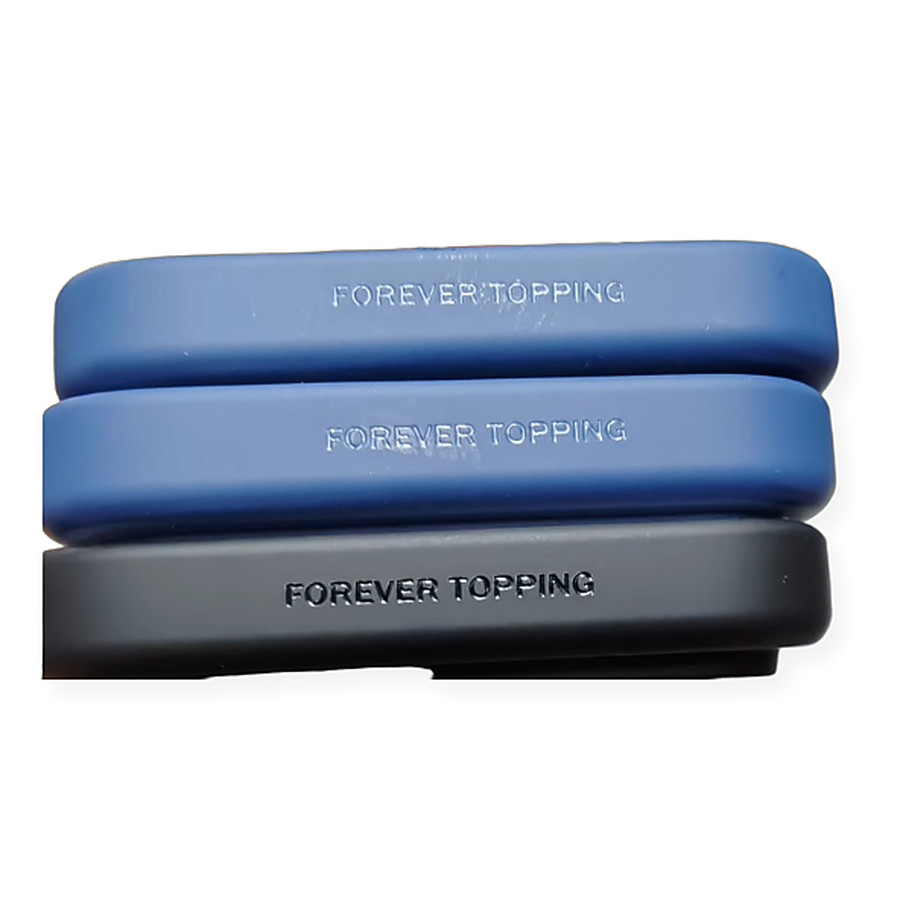
Laser marking          under 0.01 mm      flat, cannot feel it     PC - TPU - silicone - anodised alloy
Laser engraving        0.03-0.3 mm        recessed, you feel it    wood - leather - metal - acrylic
Laser marking — the surface changes colour
The beam does not cut. It heats the top layer until it carbonises, foams or changes colour, and stops. Depth stays under 0.01 mm, so the surface is still flat to the finger.
- What you see: a colour contrast sitting in the material itself. On black shells a white mark is the most common result.
- What it needs: on plastic the resin has to carry a laser additive, otherwise the mark comes out grey on grey. We specify that additive when the shell is moulded, not afterwards.
- What it is good for: logos, small type, QR codes, serial numbers — anything that has to be sharp and repeatable at speed. It is the fastest mark we can put on a case.
- Materials: PC, TPU, silicone and anodised aluminium.
- Weak point: contrast on some plastics is weak. On a light grey shell a laser mark can barely read; we will run a test piece and show you before you commit.
Laser engraving — material is taken away
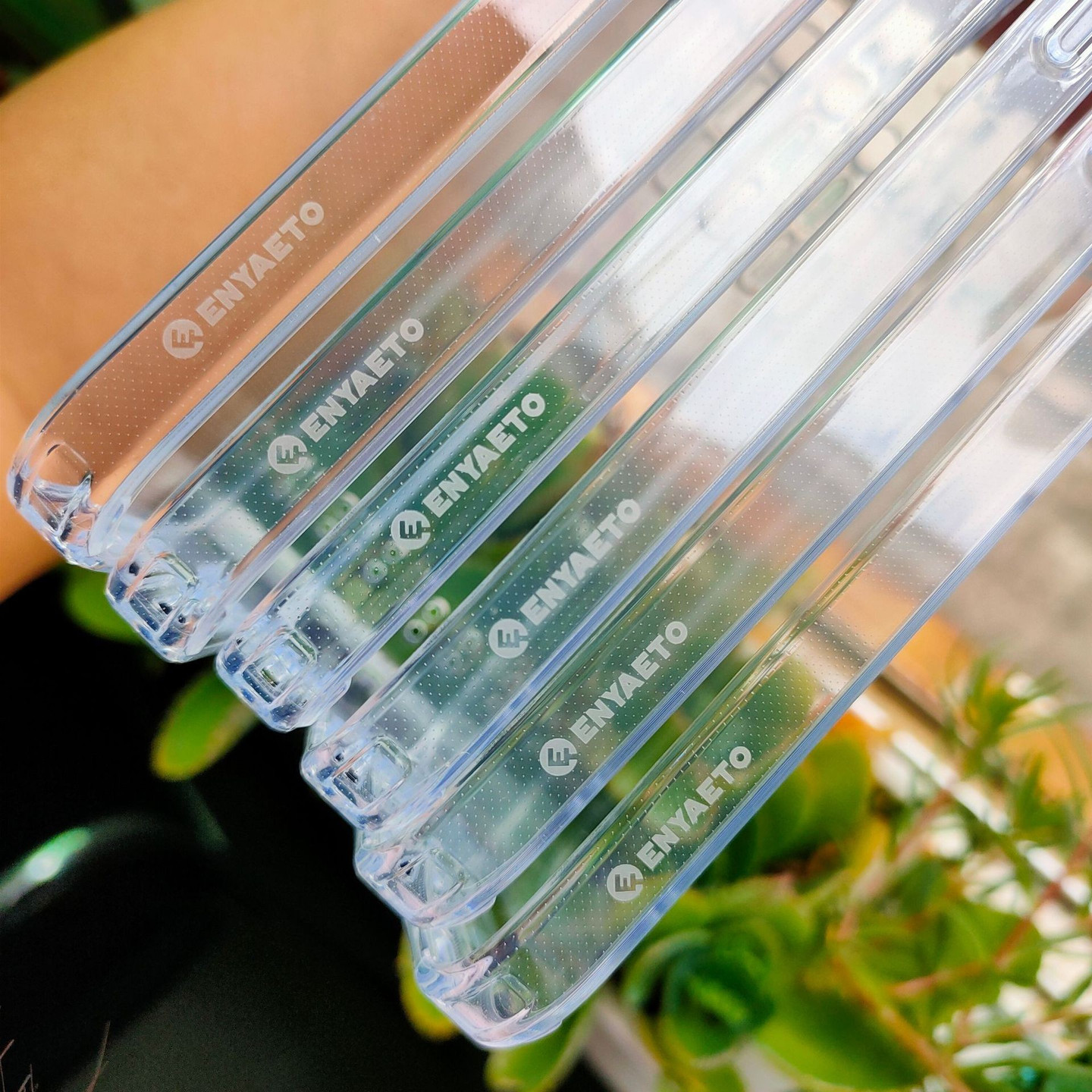
Here the beam vaporises a layer of the material and leaves a recess. Depth runs from 0.03 mm to 0.3 mm, and deeper if the design calls for it. You can feel it with a fingernail, which is the whole point.
- What you see: the base colour of the material, plus a shadow inside the recess. Still single colour, but the shadow gives the mark its depth.
- What it is good for: decorative texture, wide engraved panels, patterns that need to be touched as well as seen, and leather goods where a burnt edge is part of the finish.
- Materials: wood, leather, metal, acrylic and hard coated shells.
- Weak point: the groove collects dust, lint and hand cream over months of use. On a phone case that is a real consideration, and on light-coloured material it shows. It is also slower — a large engraved area can take many times longer than a marking pass, and you pay for that time.
The two, side by side
| Question | Laser marking | Laser engraving (deep) |
|---|---|---|
| Surface | Flat, no recess, cannot feel the mark | Recessed, you can feel the pattern |
| How it works | Top layer changes colour, foams or carbonises | Material is vaporised and removed |
| Depth | Under 0.01 mm | 0.03–0.3 mm, deeper on request |
| Colour | Single-colour contrast; white on black is the common case | Base colour plus shadow in the recess — still single colour |
| Speed | Very fast, built for batch logos | Slow; large areas take time and cost more |
| Materials | PC, TPU, silicone, anodised aluminium | Wood, leather, metal, acrylic, decorative texture |
| Cost | Lower | Higher |
| Weak point | Contrast is weak on some plastics | Grooves collect dust and dirt |
What it costs
| Parameter | Laser marking and laser engraving |
|---|---|
| MOQ | 300 pcs per design |
| Unit price | +US$0.15–0.30 per piece, set by design complexity |
| Plate charge | None — no screen, no plate, no film |
| Sample lead time | 3–7 days after the vector file is approved |
Prices in US dollars, converted at RMB 6.67 = US$1. We invoice in USD or RMB at the rate of the day.
Which one your design needs
- If the artwork is a logo, small type, a QR code or a serial number, and it must sit flush: laser marking.
- If the artwork is a texture, a pattern you want to feel, or a leather finish: laser engraving.
- If it is full colour, a photo or a gradient: neither. Go to UV printing.
Both processes are single colour by nature. If someone quotes you a four-colour laser job, they are quoting you a print.
What we need to quote it
- A vector file at final size. Raster logos get traced, and tracing loses thin strokes.
- The exact material and finish: PC gloss, PC matte, TPU, PU leather, genuine leather.
- Whether you want the mark flush or tactile — that single answer decides which process we quote.
Both are among the twelve decoration methods we run under one roof. Start with the comparison of all twelve, or go straight to IMD, 3D sublimation, water transfer printing or screen printing.
Send the vector file and the material. Tell us whether the mark should be flush or recessed and we will quote the right one. Start here — NDA available before you share any file.
Send us what you are making.
Model, quantity and the artwork you already have is enough to start. You get a price range and a lead time within one working day — no account, no ticket queue, no waiting for a form to be read.