
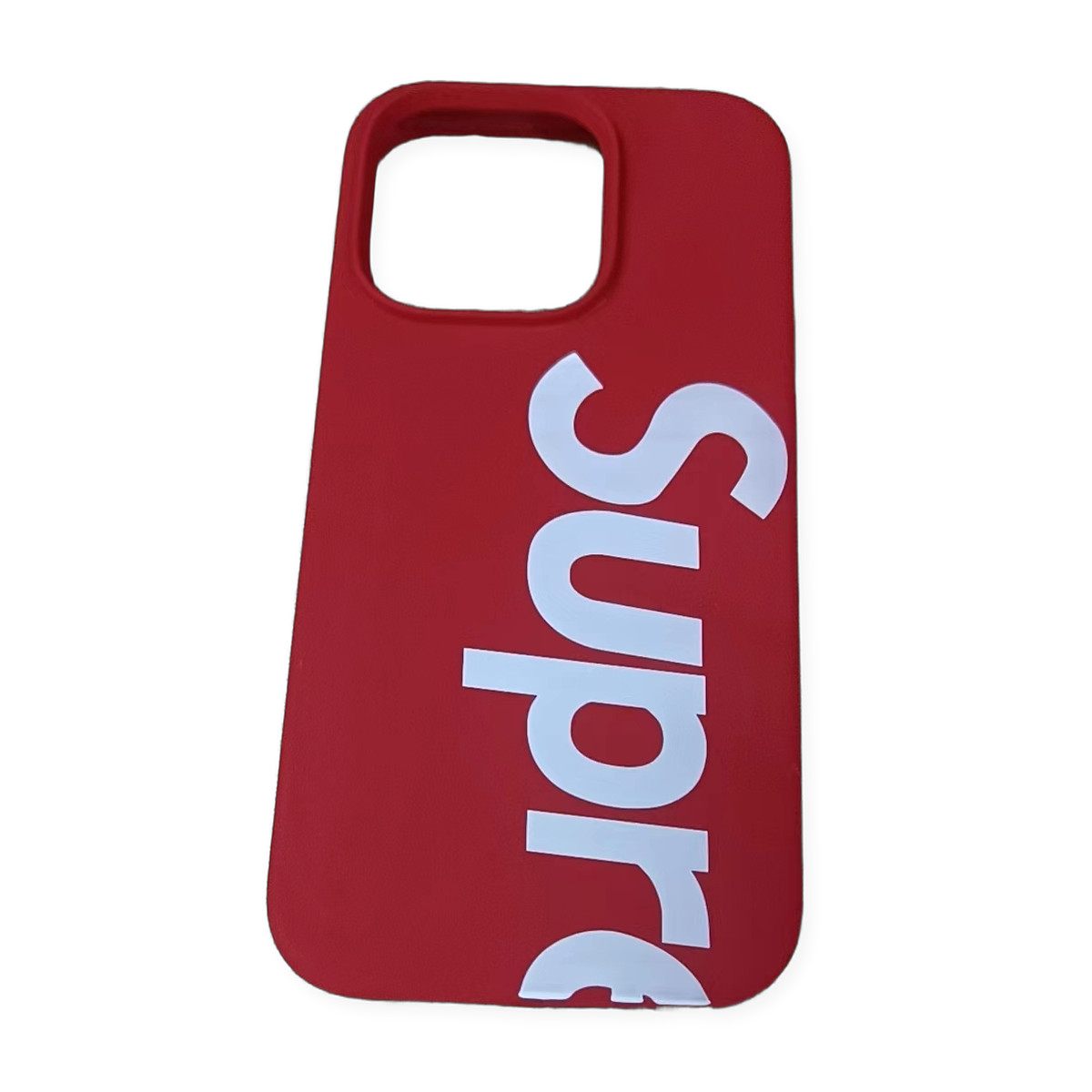
Screen printing is the oldest method we run, and it is still the one we reach for when a design has one to three solid colours and has to hold up. No film, no lamination, no ink sitting on top of a texture: the ink is pushed through a mesh, cured, and becomes part of the surface.
300 pcs per design      US$9-30 per colour        +US$0.15 per colour per pc      3-7 days sample
minimum                 plate charge, charged once   unit price, at any volume    after artwork approval
How it actually runs
- Mesh and plate. One screen is burned per colour. That screen is the plate charge, and it is quoted once per design, not per order.
- First colour. Ink is squeegeed through the mesh onto the shell, then cured under UV.
- Registration. The next colour has to land on the first one. This is where a screen-printed job is won or lost.
- Repeat per colour. Three colours means three passes, three cures, three registration steps.
Where screen printing beats everything else
- Solid spot colour on a dark shell. A thick white or red underlayer holds on black TPU far better than a digital print does.
- Text at small size. Sharp, opaque, no dot screen to break up 6 pt type.
- Flat logos and line art. One or two colours, hard edges, no need for four-colour process.
- Cost at volume. Once the screens exist, the per-piece cost is the lowest of any method we run.
Where it loses, honestly
- Photographs and gradients. Screen printing cannot reproduce a photo. If your artwork has a face, a sky or a colour fade, it belongs on UV or sublimation.
- Every colour costs a plate. One colour is cheap to set up; five colours is five screens and five registration steps. At some point UV becomes the cheaper route — usually when the artwork passes three colours.
- Thin ink film. Screen print sits flat. If you want a raised, tactile logo, that is epoxy doming or in-mould embossing, not this.
- Registration tolerance. Colours can drift by a fraction of a millimetre between passes. On a logo with tight outlines we will show you a proof first; if the design needs perfect trapping, we will push you to digital.
Screen printing against UV printing
| Question | Screen printing | UV digital printing |
|---|---|---|
| Colours | One screen per colour, best at 1–3 | Full colour, unlimited |
| Set-up cost | US$9–30 per colour | None |
| Short runs | Expensive — the screens dominate | From 10 pcs per design |
| Long runs | Lowest unit cost we can offer | Higher per piece |
| Opaque white on black | Excellent | Needs a primer pass |
| Photos and gradients | Not possible | Built for it |
What it costs
| Parameter | Screen printing |
|---|---|
| MOQ | 300 pcs per design |
| Unit price | +US$0.15 per colour, per piece |
| Plate charge | US$9–30 per colour, charged once per design |
| Sample lead time | 3–7 days after artwork approval |
Prices in US dollars, converted at RMB 6.67 = US$1. We invoice in USD or RMB at the rate of the day.
What we need to quote it
- Artwork with each colour separated, or a flat file plus a note telling us the intended colours.
- The shell: TPU, PC or 2-in-1, and the model.
- Quantity per design, and whether you expect repeat orders — screens are kept, so a repeat run pays no plate charge.
If your artwork is a photo, a gradient, or more than three colours, screen printing is the wrong tool and we will say so before you pay for screens you do not need. UV printing covers that ground from 10 pcs per design.
Screen printing is one of twelve decoration methods we run under one roof. If you are still choosing, start with the comparison of all twelve, or look at the other printing routes: IMD, 3D sublimation and water transfer printing.
Send the artwork and the model list. You get a costed quote with the plate charge broken out separately, so you can see what the screens cost and what the pieces cost. Start here — NDA available before you share any file.
Send us what you are making.
Model, quantity and the artwork you already have is enough to start. You get a price range and a lead time within one working day — no account, no ticket queue, no waiting for a form to be read.